

Wood never goes out of style in a kitchen. While colour trends shift and material fashions come and go, wood cabinets remain the one choice that consistently delivers warmth, texture, and a sense of permanence that no painted surface fully replicates.
The shift away from sterile all-white kitchens toward spaces that feel natural, grounded, and genuinely liveable has put wood kitchens back at the centre of modern design. Whether light oak or deep walnut, flat-panel minimalist or furniture-like in detail, wood works because it brings the natural world into the most used room in the home.
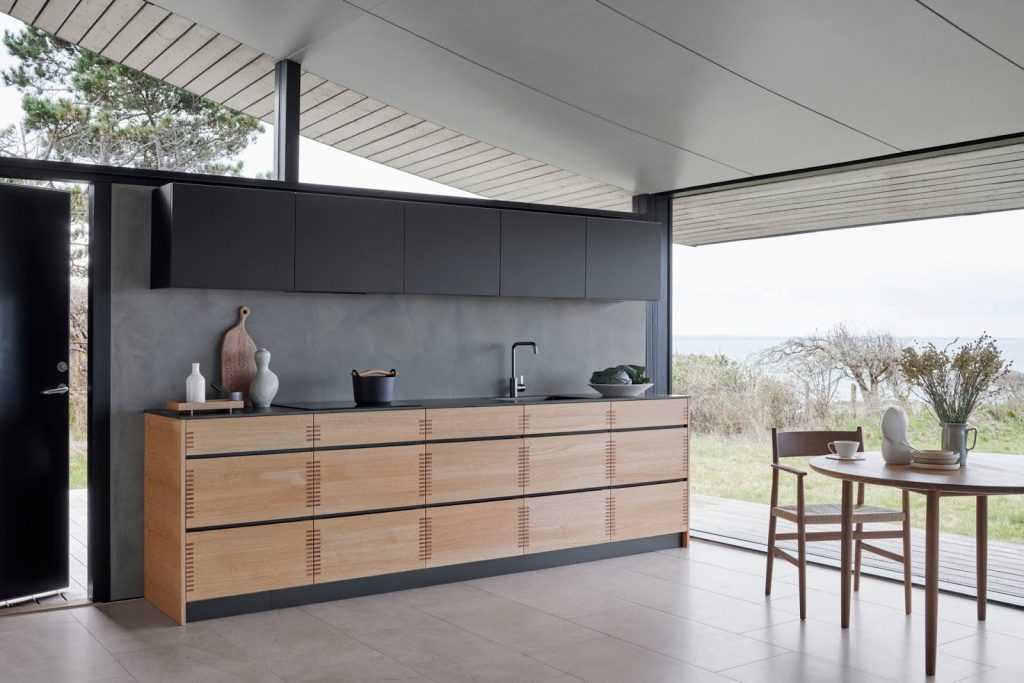
Types of Wood and Finishes for Kitchens
Choosing the right wood species and finish shapes both the look and the practicality of a wood kitchen:
Oak: Strong and versatile, with a visible grain that works in both light and dark stains.
Walnut: Deep, reddish-brown tones suited to warmer, more luxurious kitchens.
Teak: Naturally moisture-resistant with a warm caramel hue, well suited to humid climates.
Light Oak / White Oak: Soft grain and pale tone, ideal for airy, Scandinavian-style kitchens.
Engineered wood-effect foil: Combines the visual warmth of real wood grain with a surface built to resist humidity and daily wear.
12 Wood Kitchen Design Ideas Redefining the Modern Home
1. Warm Wood Scandinavian Kitchen Design
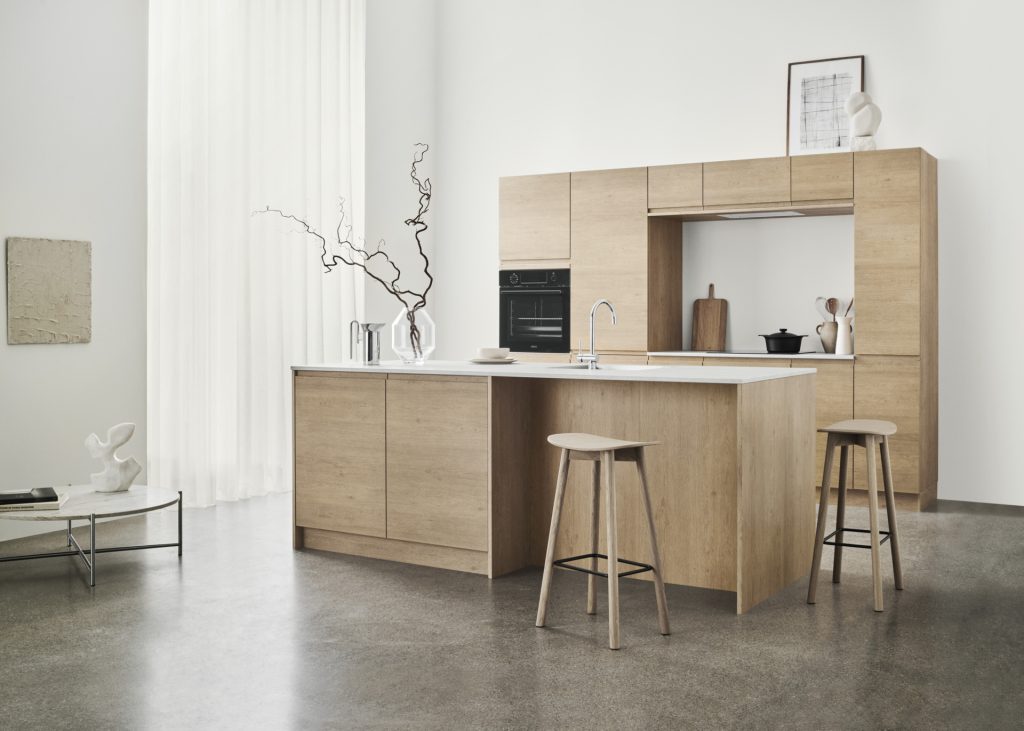
A clean, Scandinavian structure that places function first and lets the material speak, exemplified by kitchens like Kvik’s Linearis. The wood-effect front combines the warmth and grain texture of natural oak with the practical durability of a specially engineered foil surface. Flat-panel fronts with an integrated J-pull handle keep the surface clean and handle-free, with no exposed hardware to collect grease.
2. Light Oak Flat-Panel Cabinets
Light oak flat-panel cabinets are the defining look of the minimalist wood kitchen. Clean lines, a handle-less or minimal-hardware profile, and the soft grain of light oak create a kitchen that feels airy, modern, and warm. It works best with a neutral surrounding palette: white quartz worktops, white walls, and pale flooring.
3. Dark Oak Kitchen Cabinets
Dark oak brings visual weight and depth, reading as confident and grounded in quality. It works especially well in larger kitchens with generous natural light, where the grain becomes more pronounced. Paired with a light stone island in white marble, pale quartz, or grey limestone, dark oak creates a kitchen built around contrast.
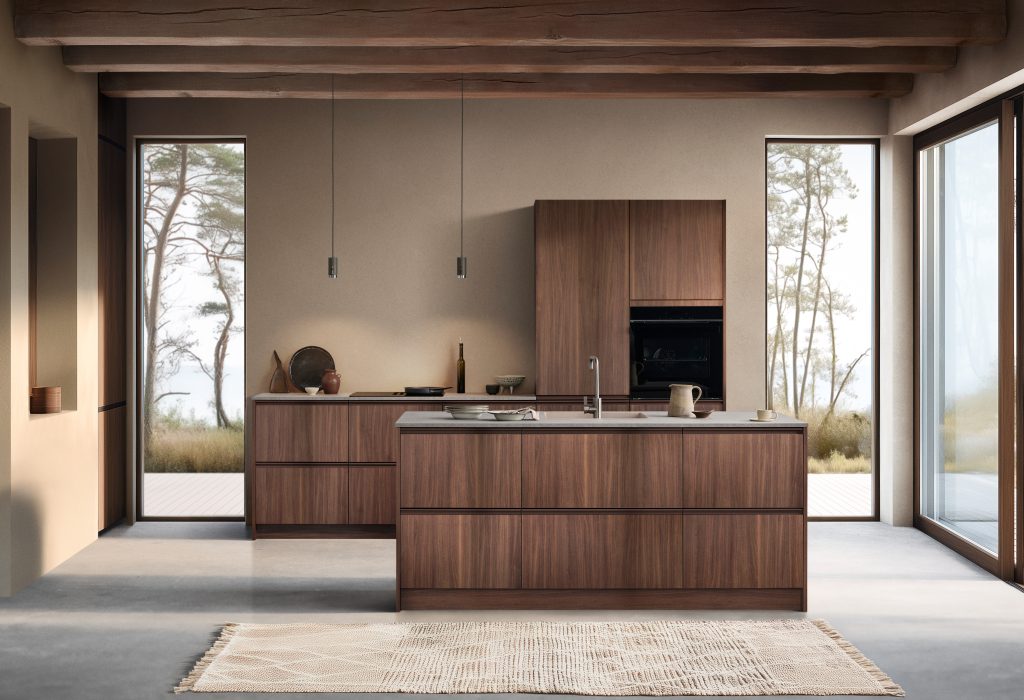
4. Wood Walnut Kitchen Cabinets
American walnut is the premium choice in the warm wood category, with deep brown tones and subtle reddish undertones. Walnut fronts pair beautifully with brass or gold hardware, which amplifies the wood’s warmth. Against a white worktop the look is striking but restrained; against dark stone, it feels genuinely high-end.
5. Two-Tone Wood and White Cabinets
Wood lower cabinets paired with white upper cabinets is one of the most practical and enduring combinations in wood kitchen design. It captures warmth without making a large kitchen feel heavy, and gives smaller kitchens a grounded lower half while keeping the upper half light and open.
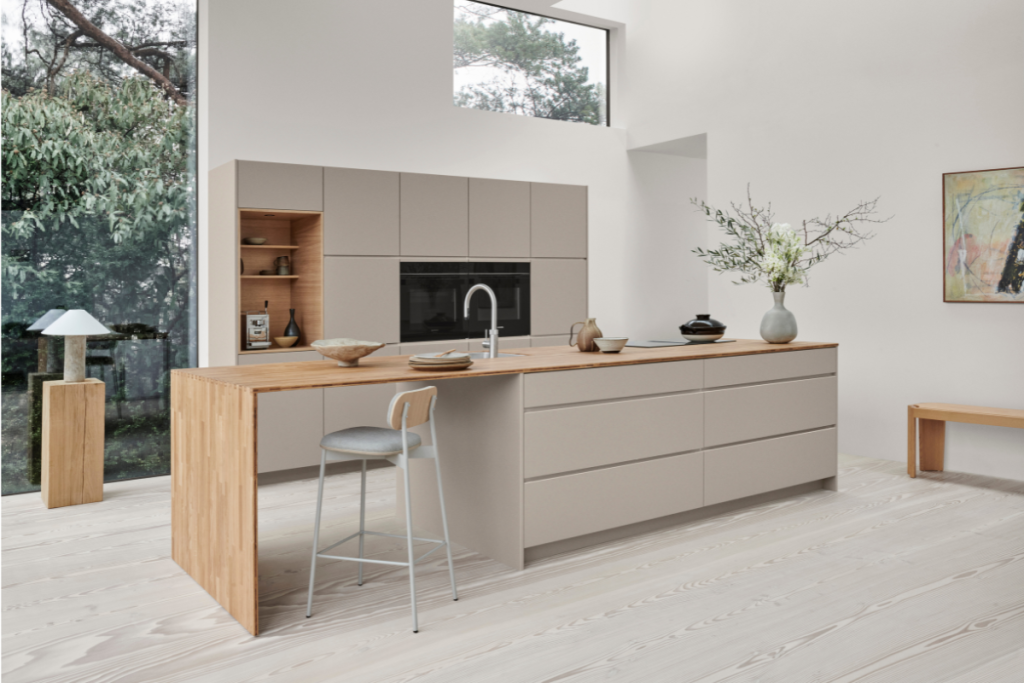
6. Japandi Wood Kitchen
Japandi fuses Japanese wabi-sabi, finding beauty in natural imperfection, with Scandinavian simplicity. A Japandi wood kitchen uses flat-panel oak or white oak fronts with minimal hardware, natural stone or wood worktops, a muted palette, and deliberate open shelving for a small number of chosen objects.
7. Wood Cabinets with Stone
Wood and stone are the pairing that underpins many of the most enduring kitchens in modern design. Light oak with white marble is the classic combination; dark oak with grey slate or black granite is more dramatic; walnut with quartzite creates a naturally luxurious look without high-gloss finishes.
8. Open Shelving in Wood Kitchen
Open wood shelving adds texture and warmth that pure white or grey kitchens can lack, while modern details like flat panels and handle-less doors keep the look current rather than rustic.

9. Country or Rustic Wood Kitchen
Reclaimed or distressed wood fronts, paired with visible grain and a slightly weathered finish, bring a cosy, lived-in character to a kitchen. This works well combined with open shelving, ceramic accents, and warm-toned lighting for a welcoming, farmhouse-inspired feel.
10. Mid-Century Wood Kitchen
Smooth, low-profile wood cabinetry with tapered legs or slim hardware channels a retro sensibility without feeling dated. Paired with warm brass fixtures and a simple, uncluttered layout, it blends nostalgic style with a genuinely liveable, modern kitchen.
11. Wood Paired with Bold Colour
Rather than surrounding wood with only neutrals, pairing warm wood cabinetry with a bold accent, such as a deep green or navy island, lets the wood calm and ground a more colourful scheme. The natural material acts as a visual anchor against the stronger hue.
12. Wood Island as a Statement Piece
Introducing a wood island a few tones darker (or lighter) than the surrounding cabinetry creates depth and a sense of intentional design. Treating the island as a freestanding, furniture-like piece rather than fixed joinery adds individuality to the whole kitchen.
How to Choose the Right Wood Cabinet for Your Kitchen
Light or dark?
Light oak and white oak suit kitchens with less natural light or where you want the space to feel airy. Dark oak and walnut suit larger, brighter kitchens where the material’s depth can be fully appreciated.
Grain direction and pattern
Vertical grain on flat-panel fronts reads as taller and more architectural; horizontal grain feels more grounded and furniture-like. Both depend on ceiling height and the kitchen’s overall proportions.
What does wood age into?
Real wood and quality wood-effect surfaces develop patina over time. Choose a tone you’ll want to live with in five or ten years, not just on installation day, warm mid-tones and natural walnut tend to age more gracefully than very light, bleached finishes.
Wood Kitchen Trends Worth Watching
Current wood kitchen trends lean toward mixed-material pairings (wood alongside marble, stone, or metal accents), Japandi-inspired minimalism, and a growing preference for sustainably sourced, FSC-certified wood. These trends favour natural texture and craftsmanship over decorative detail, keeping wood kitchens feeling current rather than rustic by default.
Design Your Wood Kitchen with Kvik
Kvik designs kitchens rooted in Danish design principles: quality materials, purposeful proportions, and finishes built to last. Across the full Kvik kitchen collection, you’ll find warm wood options, clean Scandinavian structures, and thoughtful storage systems that make every kitchen work as well as it looks.
Whether you’re drawn to light oak, deep walnut tones, a two-tone wood and white combination, or a full minimalist wood kitchen, Kvik’s designers work with you to find the right fit for your space, your lifestyle, and your taste. Explore the full kitchen collections and book a free private design meeting with a Kvik designer in Bangkok, your wood kitchen, designed with you from the very first conversation.
Frequently Asked Questions: Wood Kitchen Design Ideas
Yes. Modern wood cabinets with flat-panel fronts, handle-less profiles, and integrated appliances are one of the defining looks of contemporary kitchen design. The key is a clean profile that lets the material do the work.
Oak is the most versatile and widely used option. Walnut offers a richer, warmer look for higher-end kitchens.
Flat-panel doors, handle-less or minimal-hardware profiles, clean-lined upper cabinets, and a neutral surrounding palette all contribute to a modern look.
Solid natural wood requires more care in humid conditions. Engineered wood-effect surfaces, such as the foil-finished fronts used in Kvik’s Noliam kitchen, are designed to resist humidity while keeping the warmth and grain character of natural wood.
Yes. Quality wood cabinetry, whether solid or engineered wood-effect, tends to age gracefully and remains in style far longer than trend-driven colour finishes, making it a durable choice for a kitchen you plan to keep for years.