

You’ve fallen for a black kitchen. The moody cabinets, the sharp contrast against a stone worktop, the way it photographs so well it doesn’t even need a filter. Then someone mentions the cleaning, and doubt creeps in. Will every touch leave a mark? Will you spend your weekends scrubbing instead of cooking?
A black kitchen isn’t harder to clean. It’s different to clean. Once you know what actually shows up on a dark surface and how to deal with it, the upkeep is manageable, and often less dramatic than people expect. Choosing the right finish from the start, like the super-matte fronts in Kvik’s range, makes it easier still.
Is a Black Kitchen Really Harder to Clean?
Not exactly. Black surfaces hide certain things well: food stains, dark splatters and everyday grime blend right in. What they don’t hide is dust, fingerprints, and water spots. Those show up in sharp contrast against the dark base, which is why black kitchens get a reputation for being high-maintenance.
A white kitchen shows spills and stains more readily, so you catch and clean them faster. A black kitchen hides those same spills, but broadcasts dust and smudges instead. Neither colour is maintenance-free. Each just asks for a slightly different routine.
Three things stand out on black: fingerprints on handles and door edges, dust on flat fronts that catch afternoon light, and water spots near the sink or after a wipe that isn’t dried. All three are more visible on gloss than matte.
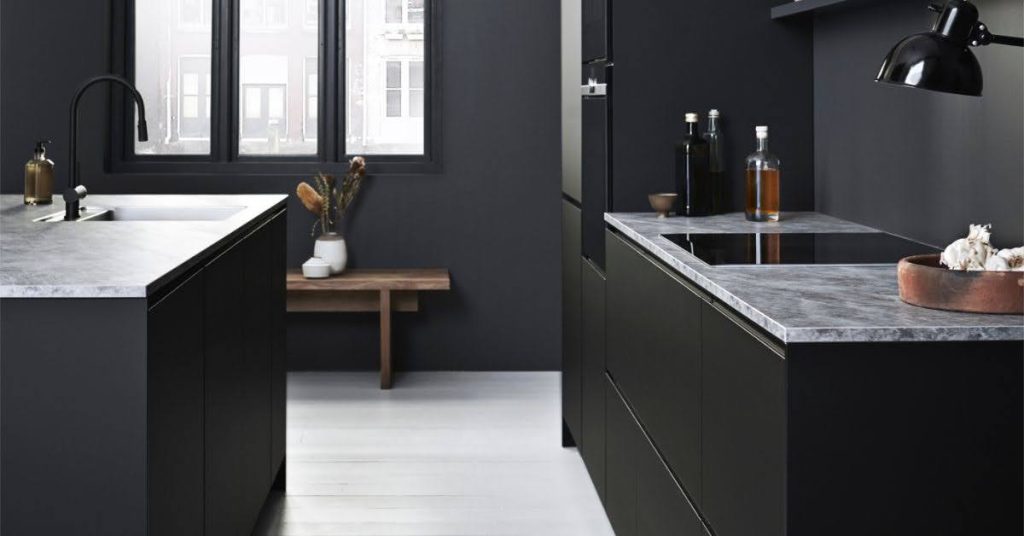
Matte vs. Glossy Black: Which Finish Hides More
Finish matters as much as colour here. A matte black surface diffuses light instead of reflecting it, which makes fingerprints and light smudges far less obvious, especially on anti-fingerprint matte finishes. It’s the more forgiving option for a busy household or a kitchen that gets touched constantly.
Glossy black looks striking in photos and under the right lighting, but it reflects everything: dust, streaks and every fingerprint left behind. It’s not a bad choice, but it does ask for more frequent wiping if you want it to look sharp.
If low-maintenance is the priority, lean matte. If you’re drawn to the reflective, high-drama look and don’t mind wiping it down more often, glossy still works; just budget a bit more cleaning time for it.
A Simple Weekly Routine That Keeps a Black Kitchen Looking Clean
You don’t need specialty products or a strict daily regimen. A short weekly routine covers most of it.
- Dust first, with a dry microfibre cloth. This lifts loose dust and light smudges before you introduce any moisture, which helps avoid streaking.
- Wipe with a mild solution. Warm water with a few drops of dish soap handles most grease and fingerprints. Avoid anything abrasive. It can dull the finish or leave fine scratches that show up more on dark surfaces than light ones.
- Dry immediately with a clean cloth. This is the step people skip, and it’s the one that prevents water spots and streaks from forming in the first place.
- Wipe with the grain on textured or wood-look black surfaces. Going against it tends to leave faint streak marks.
- Handle stubborn grease on cabinet fronts with a mild vinegar mix. Warm water, a splash of white vinegar and a drop of dish soap lifts grease without harsh chemicals. Skip it on granite or natural stone, where acids can dull the surface.

Choosing Materials and Finishes That Make Maintenance Easier
Your choice of material and finish at the design stage does a lot of the work before you ever pick up a cloth. Kvik’s Compose kitchen in Classic Black, for instance, has fronts with a soft vertical grain and sleek integrated metal handles with smooth, easy-to-clean curves, so you get the depth of a black kitchen without the upkeep you might expect.
Worktops matter too. Porcelain is one of the easiest surfaces to live with in a black kitchen: it’s scratch-resistant, highly heat-resistant and virtually non-absorbent, so spills wipe straight off. Black granite such as Black Galaxy adds natural depth, though it’s best cleaned with pH-neutral products rather than anything acidic.
Still deciding whether a black kitchen is right for your home? Visit a Kvik showroom to explore different kitchen designs, cabinet finishes and materials in person. Seeing the colours and textures up close can make it easier to choose a look that suits both your style and everyday needs.
Book a visit to the Kvik kitchen showroom to see matte black fronts and worktops side by side.
Frequently Asked Questions About Black Kitchens
Q: Are black kitchens high-maintenance?
No. They just need a different routine than a white kitchen, mainly more attention to dust, fingerprints, and water spots, but a weekly wipe-down with a microfibre cloth keeps most black kitchens looking sharp.
Q: Does matte or glossy black show fingerprints more?
Glossy black shows fingerprints and smudges far more readily because it reflects light. Matte finishes diffuse light instead, which hides the same marks much better.
Q: How often should I clean a black kitchen?
A quick wipe-down once a week is usually enough for normal household use. Busy kitchens with kids or frequent cooking may benefit from a light daily wipe of high-touch spots like handles and the area around the sink.
Q: What's the best way to clean black kitchen cabinets without streaking?
Use a damp microfibre cloth with a mild soap and water solution, then dry immediately with a separate clean cloth. Skipping the drying step is the most common cause of streaks and water spots.
Q: Do black worktops scratch more easily than lighter ones?
Scratches aren’t necessarily more frequent on black surfaces, but they are more visible against the dark background. Choosing a scratch-resistant material like porcelain, and avoiding abrasive scouring pads, keeps this to a minimum.
Q: Is a black kitchen a good choice for a busy family home?
Yes. Pair matte fronts with a hard-wearing worktop like porcelain, and keep a microfibre cloth near the sink for quick daily wipes of handles and high-touch areas.